
SPleen Qi
In Traditional Chinese Medicine (TCM), our Spleen Qi rules over muscular strength, intelligence, metabolism, and our ability to ground and nurture ourselves.
Represented by the centering qualities of the Earth Element, our Spleen/Stomach axis regulates our digestive power. Our spleen as an organ helps extract essence from the foods we eat and transforms these nutrients into vital energy that helps our kidneys, lungs, and heart sustain our blood supply.
Our Spleen Meridian follows the deep internal struts of our body’s fascial support; from the inner arches of our feet, up into our ribcage. To trace this pathway, stand in Tadasana (Mountain Pose) and feel the buoyant energy that springs up from the inner arches of your feet and continues up along the inner pathways of your legs. These lower-body “roots” spread through our deep front line of fascia to merge with the bandha-activated support and engagement in our abdomen.
Postures that help boost and strengthen this internal reservoir of our Spleen Meridian’s support include Anjaneyasana (low lunge), Hanumanasana (front splits), Ardha Chandrasana (balancing half-moon), Garudasana (Eagle pose) and Yoga planche. Any heating or activation of our quadriceps bundle and “core” muscle group will have a warming effect that kindles “Agni” - digestive fire.
The energetic spiritual component of our Spleen Meridian is known as “Yi”- our intelligence, thought patterns, consumption of information, and our ability to concentrate and focus our mind.
Energetically, fueling our Spleen Qi allows for the scattered patterns and chaotic rhythms of Summer to begin distilling themselves into a more realized version of where we are going on our journey.
In the Zodiac, this energy is represented by Virgo season. The influence of Virgo (ruled by Mercury) inspires us to start organizing our surroundings and shifting our habits and schedules into a more constructive framework that suits the hard work and “back to school” energy prevalent during late August into September.
Eating warm, golden, Spleen-supportive foods during this early Autumnal transition helps us foster a sense of grounding and stilling for the arrival of the cold seasons and readies our mind, body, and spirit as we prepare to refocus our energy and journey deeper into the Yin of the year.

Spleen FOods:
Golden, Sweet, Centering
When we choose ingredients grown on proximal gardens and farms, and honor the seasonal abundance of local produce, eating for our Spleen (and every other organ) is easy.
“Spleen Season” is heralded by the return of orchard apples and initiated by the first husks of sweet corn still fresh with morning dew from the fields. It deepens into the abundance of squash, pumpkins, sweet potatoes, and other grounding root vegetable foods that feel so nourishing and comforting to return to eating once the weather gets cool.
In TCM, we try to strengthen and consume foods slightly ahead of when our body will need the nutrients from them, as the process of turning our Food Qi into Prana (life force) for our blood takes time. Root vegetables and beta-carotene rich foods help thicken our blood which helps slow our circulation- an important physical shift to honor the need to keep our organs warm. The fascia that supports our Kidney, Spleen, and Liver all traverses the internal femoral-led line of our inner leg, which is why keeping our feet warm during this seasonal shift is especially important. Cold leads to damp, which can make our lower body feel sluggish and lead to varicose veins among other issues if we constrict the tissues that provide nourishment and exchange between our spine and trunk and our lower limbs.
foods for late summer and early autumn
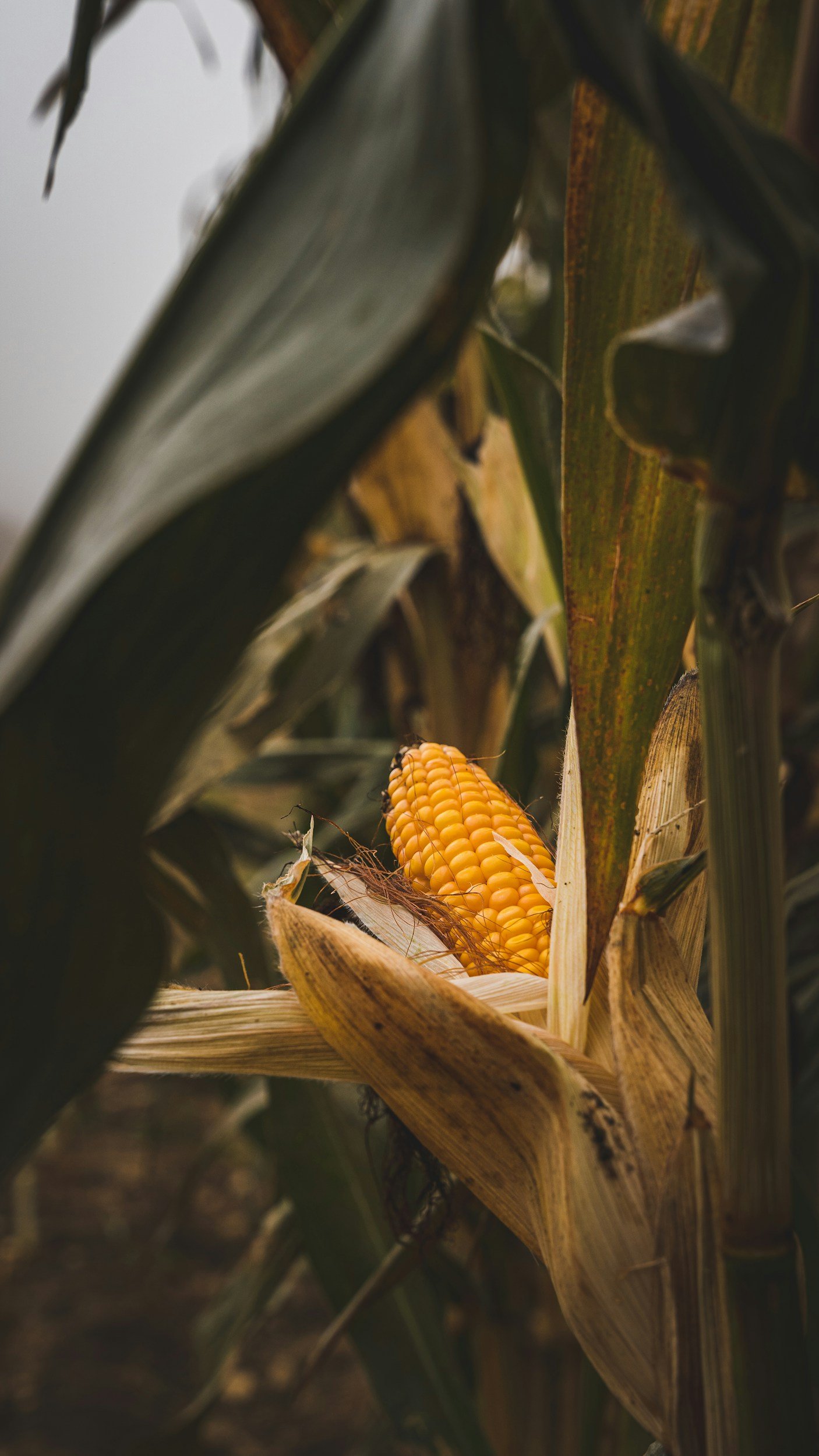

CORN
Corn is one of the first foods we reach for during Late Summertime.
Late Summer is a special Fifth Season that rules over digestive strength and metabolism; grounded by the element of Earth, and the sweet flavor. There is an abundance of corn ready throughout August and into September, the prime chapter for re-centering ourselves with the influence of the humid and turbulent transition between Summer and Autumn.
Pairing locally-made corn tortillas with some rich black beans, avocado, and a homemade garden tomato salsa offers a beautiful opportunity to support and nurture our Spleen during breakfast, lunch, and dinner.
Niacin (Vitamin B3) is one of the most important micronutrients made bioavailable by the process of nixtamalization- stone-grinding soaked corn in volcanic ash to “unlock” the mineral content of the corn and make it easier for our body to digest in the form of a delicious tortilla. Vitamin B3 supports our body in turning food into energy, which is one of the hallmark features of building Spleen strength and support.
Other key nutrients found in corn:
Vitamin C: Protects cells from damage and boosts immunity
Thiamine (B1): Supports brain function and energy metabolism
Folate (B9): Encourages cell growth and repair, aids in red blood cell formation
Magnesium & Potassium: Regulate fluid balance, muscle function, and blood pressure
Traditional Chinese Medicine also notes that corn helps relieve dampness in our body- eating more corn during Late Summertime can help our body feel less heavy and stagnant in the heat and humidity.
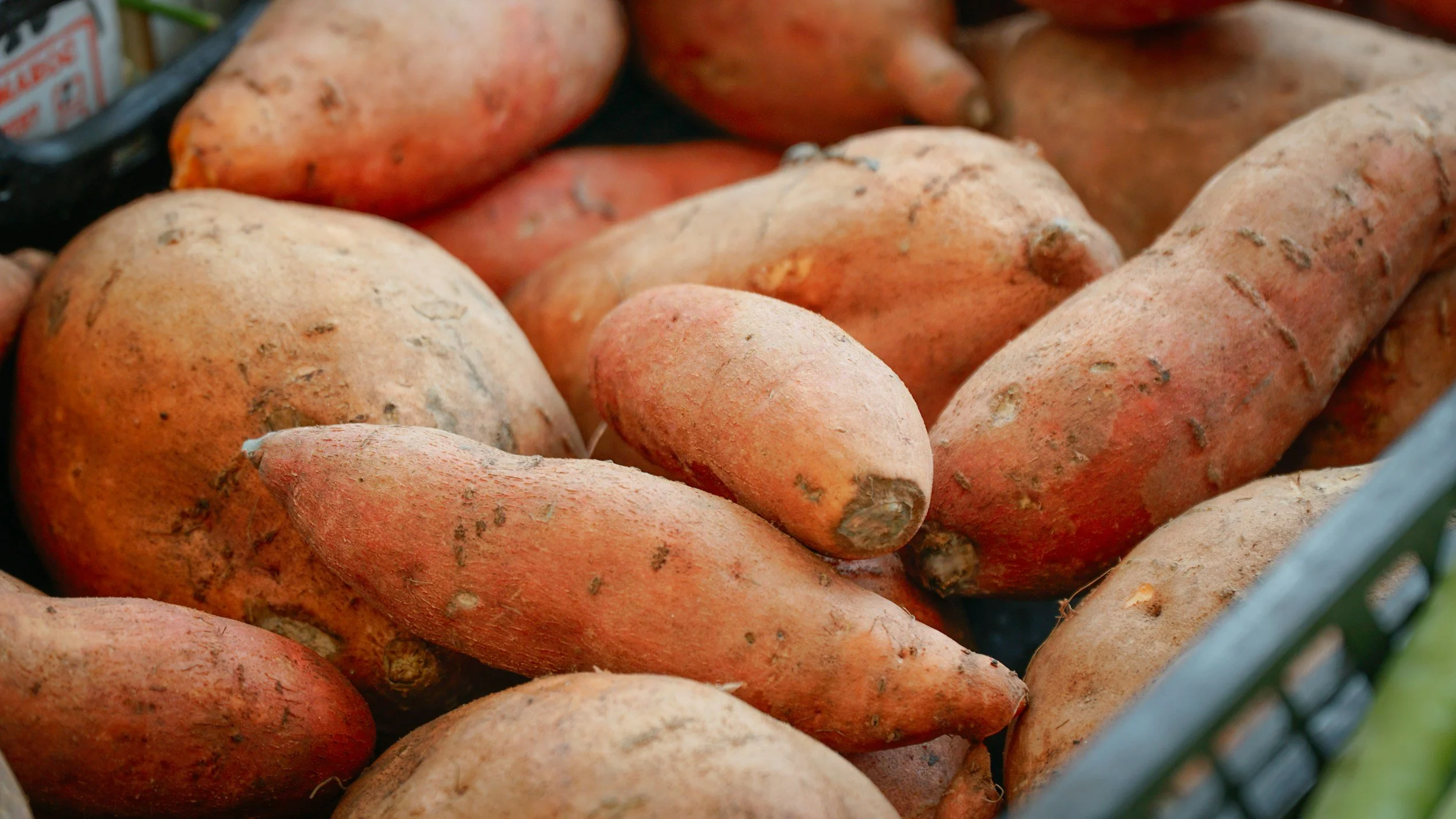
POTATOES
(Locally grown. Favoring the Japanese, Golden, and Sweet varietals.)
Potatoes are one of the most beautiful root vegetables for supporting “Yi” - intelligence - as their powerhouse stores of carbohydrates initiate the glucose-glycogen chain that helps our brain function optimally. Eating warm, grounding, and nourishing foods helps us focus and distill our energy during the shift into Vata Season; dryness, wind, and more harsh and brittle surroundings.
Key Nutrients:
Beta Carotene (Vitamin A): Supports eye and skin health and boosts immunity.
Vitamin C: Antioxidant. Protects cells from damage and also helps with collagen-building and immune support.
Vitamin B6: Converts food into energy and protects brain health.
Vitamin B5: Assists in the metabolic conversion of fats, proteins, and carbohydrates.
Potatoes are also a beneficial source of dietary potassium, which helps with blood pressure by balancing sodium levels within our cells. Potassium also helps with muscular relaxation through a process known as “hyperpolarization” - balancing the negative electrical charge from inside of our cells - directing nerve signals to stop telling a muscle to contract. The same process works within our blood vessels to control blood pressure. Our heart also needs a consistent stream of potassium to keep beating at a steady rate.
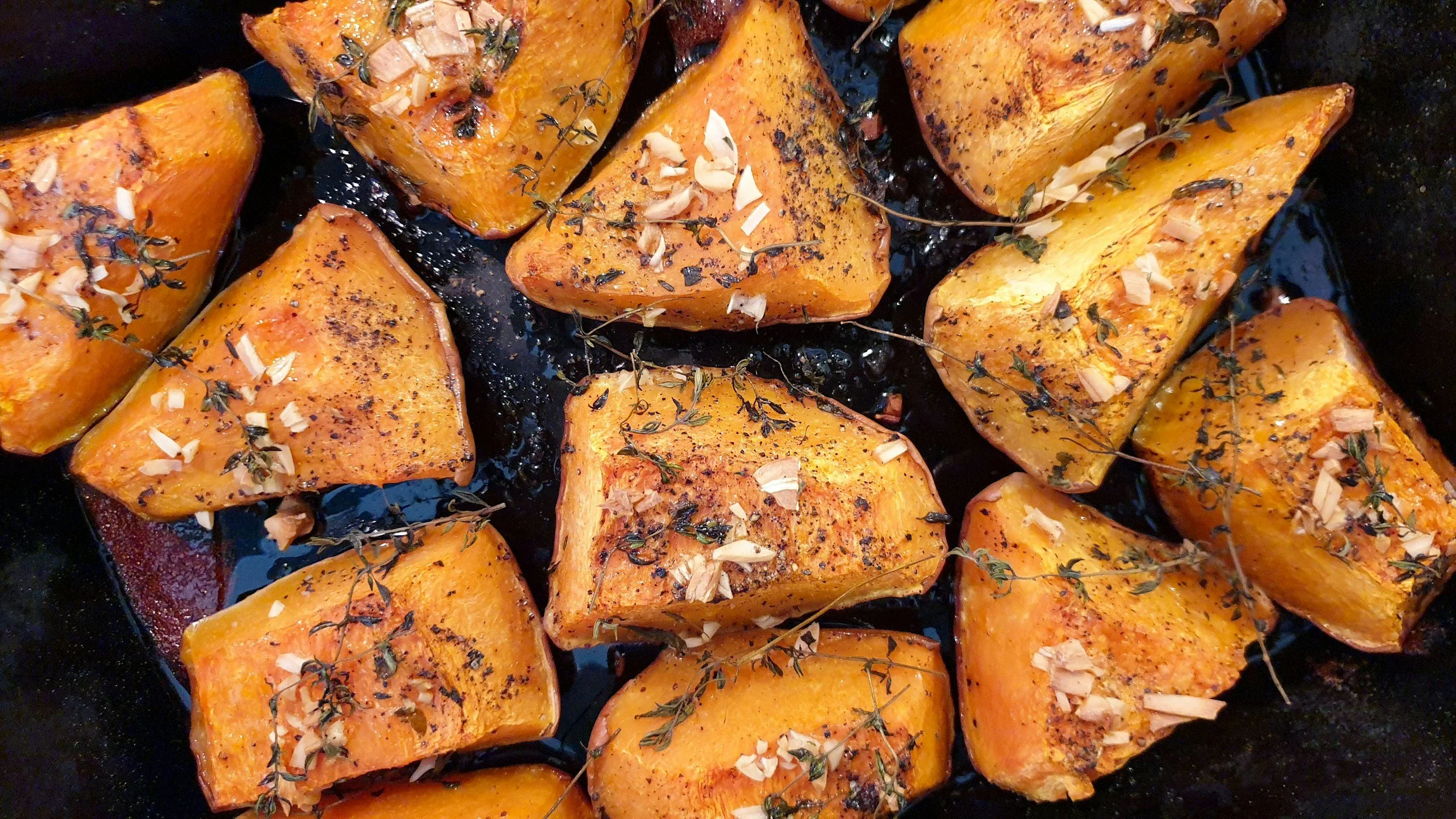
Acorn & Butternut Squash
Corn, Beans, and Squash. The Three Sisters.
I remember reading the book ‘Braiding Sweetgrass’ by Robin Wall Kimmerer during COVID and thinking about how perfect and wonderful the Earth is; this extraordinary place provides everything we need to grow and evolve. Evolving as a benevolent species means moving towards a human population that does not raise and kill animals for meat. It is becoming more and more important to advocate for a plant-based diet to support equal rights for animals and equal rights for fellow humans who have to endure the suffering of a warming world.
Where we live, there was enough support to close down an entire facility of puppies being bred for animal testing. If enough people stood up to care just as much to shutter a local CAFO, the push for lab-generated meat would accelerate and there would be far less suffering and disease.
What do you think? Could you try going plant-based and relying on beans and grains for protein? Beans and squash, beans and rice, beans and corn- they all make a complete amino acid profile and do not require the exploitation of animals to help fuel our cells. What if our purpose this incarnation is to put an end to global animal farming in favor of a more humane alternative? If wolves can evolve to become our pets, imagine the beauty of coexisting with animals as our equals? It gives me hope.
Anyway, the key nutrients found in squash are very similar to those of a sweet potato. You can swap them interchangeably in recipes for equally delicious results.
Vitamins & Minerals
Potassium, magnesium, Vitamin C, Vitamin A (Beta Carotene)